

FERC approves SPP consolidated generator interconnection and transmission planning process
6 min read
On March 13, 2026, the Federal Energy Regulatory Commission (FERC) issued an order accepting tariff revisions filed by the Southwest Power Pool (SPP) establishing the Consolidated Planning Process (CPP), a fundamental restructuring of how the regional grid operator will manage both new generation and expansion of the transmission system. Supported by all SPP member states and a broad coalition of stakeholders, the CPP synthesizes these independent tracks into a single, proactive three-year planning cycle.
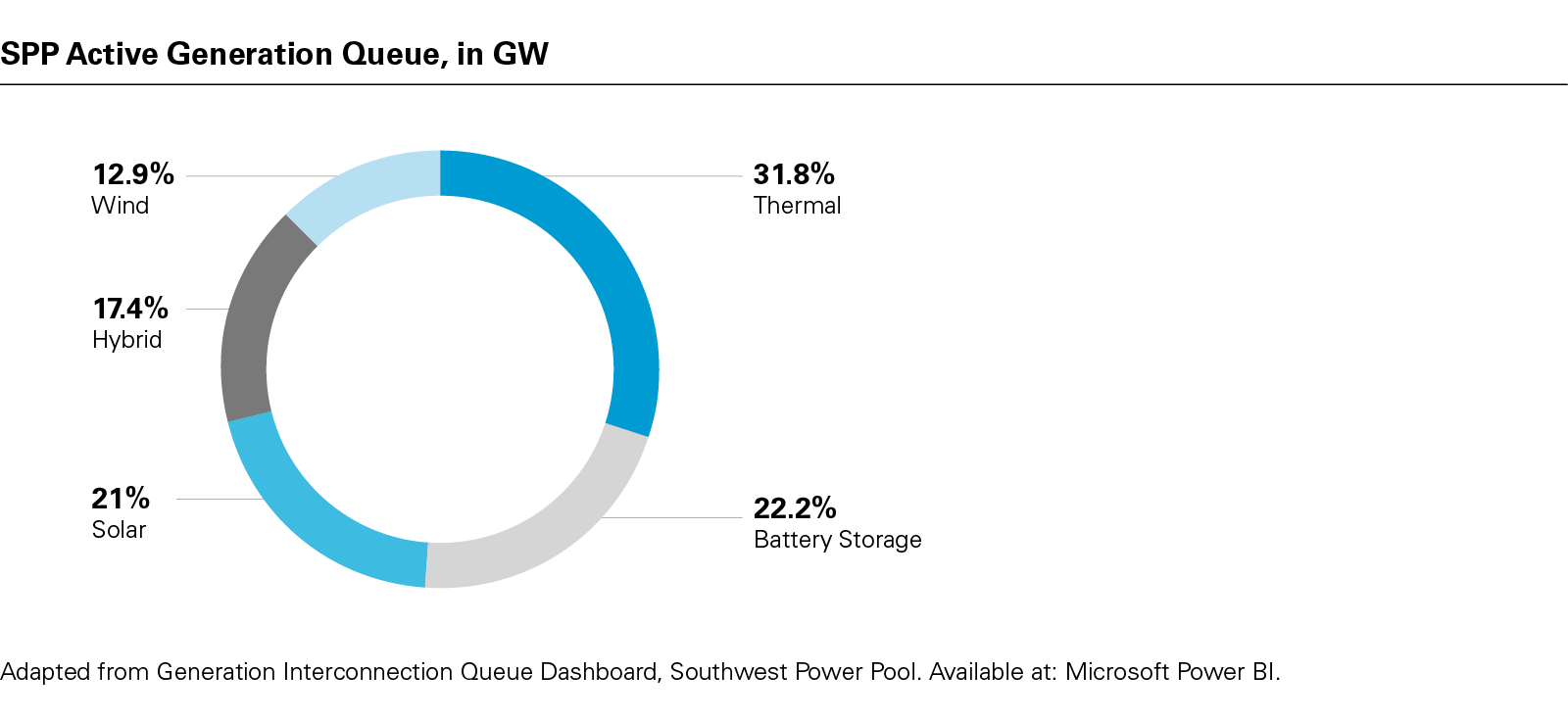
FERC issued this order1 as regional grid operators under its jurisdiction face substantial demand for power driven largely by hyperscale data centers, domestic manufacturing, and artificial intelligence infrastructure. Prior to this proposal, SPP conducted regional transmission planning and generator interconnection through siloed processes. This framework often resulted in overlapping study costs, extended milestone delays, and high attrition rates for proposed projects.
The CPP proposal originated from dovetailing federal and regional regulatory efforts to address administrative overhead and study delays associated with bringing new generation online. The initiative was prompted by FERC Order No. 2023, which required transmission providers to implement interconnection queue reforms. In response, SPP formed the Consolidated Planning Process Task Force to design a regional framework to merge its Integrated Transmission Plan and generator interconnection studies. Following extensive stakeholder engagement through this task force among transmission owners, state regulators, and independent developers, the SPP Board of Directors approved the CPP in August 2025. SPP formally submitted the proposed revisions to its Open Access Transmission Tariff (Tariff) to FERC in November 2025.
While the CPP will not directly consider large load interconnections, the Futures development portion of the CPP process will consider factors impacting SPP peak load, including data centers and other large loads. Data centers and large loads will interconnect to the SPP system under the High Impact Large Load Generation Assessment (HILLGA) study proposal accepted by FERC in January 2026.2 Relatedly, SPP refiled its Conditional High Impact Large Loads Service (CHILLS) proposal on February 10, 2026, requesting that FERC act on the proposal by mid-April, with a July 1, 2026 effective date.3 Under the CHILLS proposal, large loads may receive long-term, non-firm energy and transmission where either a Designated Resource is not yet online or where Network Upgrades remain under construction to permit such large load to receive transmission service. For additional information on the HILLGA and CHILLS proposals, please refer to the SPP discussion in our prior article published in August 2025: Grid operators propose innovative measures to manage electricity demand from data centers | White & Case LLP.
Overview of Tariff Revisions
At the March open meeting convened one week following the order, FERC Chairman Laura Swett heralded the CPP as a "watershed process" and that other regional grid operators should emulate SPP's approach to streamline, if not also merge, their respective interconnection and transmission planning processes. Swett emphasized that the new process benefits ratepayers by increasing financial stringency on prospective developers. In concurring opinions accompanying the order, Commissioners David Rosner and Judy Chang commended the process as a practical blueprint for other grid operators.4 In remarks at the open meeting, Rosner added that CPP benefited from a unanimous vote from all member states of SPP. This endorsement arrives as transmission providers across the country have yet to clear interconnection queue backlogs amid significant load growth from artificial intelligence.
 View full image
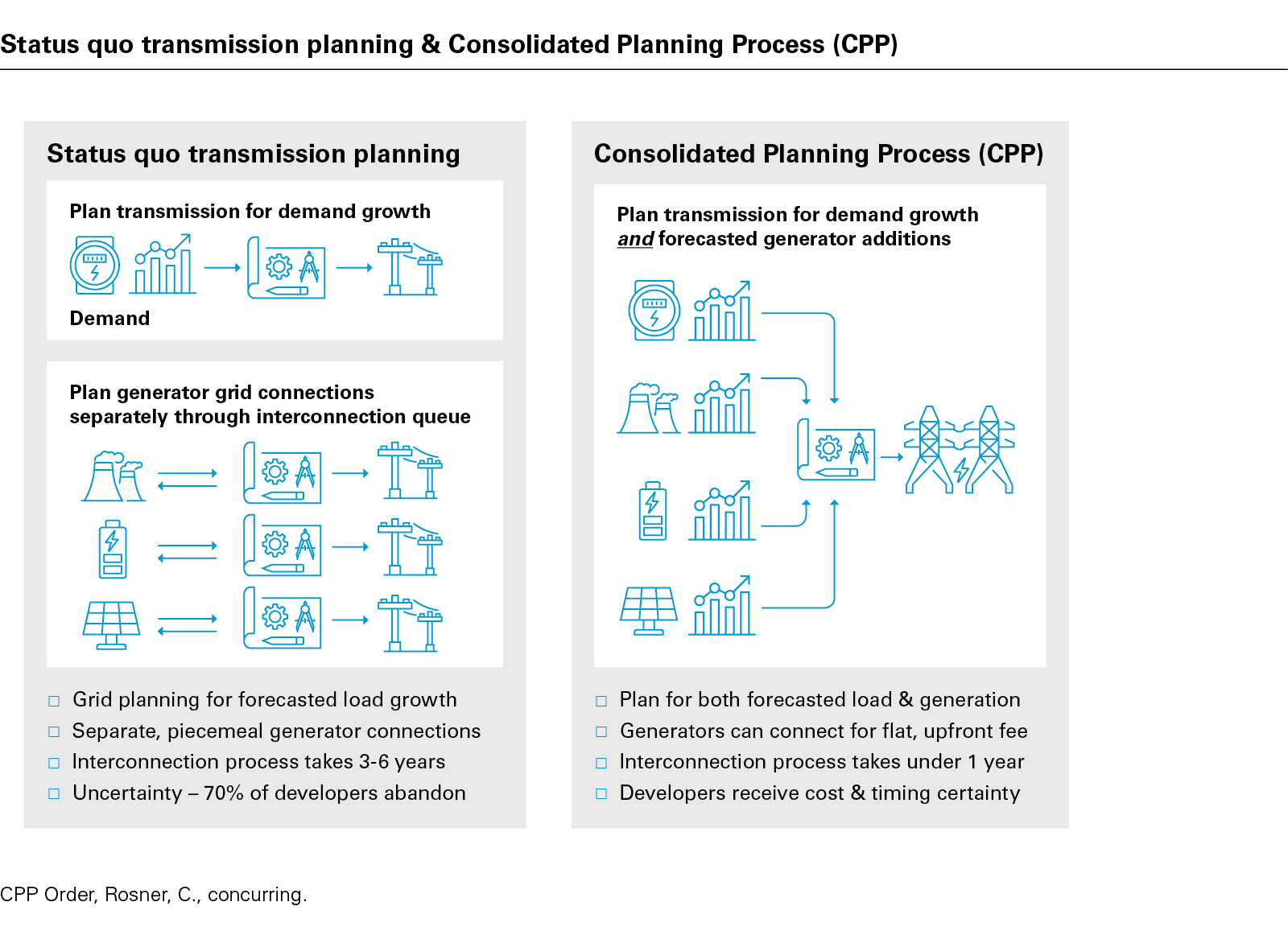
The CPP restructures the generator interconnection process to address persistent queue backlogs by adopting a unified approach whereby generators will be able to connect to the grid by paying a standardized, flat, upfront fee rather than funding piecemeal network upgrades. By condensing the study phases, the entire interconnection process is intended to take under one year to complete, which should provide developers with greater cost and timing certainty that will, in turn, enhance their ability to secure any remaining project financing and move toward commercial operation.
Under the prior model, SPP planned transmission for forecasted demand separately while evaluating generator requests through distinct, individualized studies segmented by fuel type. According to SPP, this process took three to six years, with approximately 70 percent of projects eventually being abandoned by developers. By merging generator interconnection requests into the broader regional planning cycle, SPP aims to ensure that grid upgrades are evaluated holistically for their economic and reliability benefits to the entire system, satisfying the federal rule to identify the most efficient and cost-effective transmission solutions rather than relying on isolated generator additions. In the approval order, FERC indeed found that this unified approach complies with the regional transmission planning and cost allocation requirements of Order No. 1000.
To resolve some of the financial uncertainty of the previous process, the CPP will establish a fixed per-megawatt entry charge (known as the GRID-C fee) for generators seeking interconnection. SPP will calculate and publish this rate annually before developers submit their requests. While this standardized contribution may be higher than initial estimates under the prior model, it provides upfront cost visibility before entering the queue, mitigating the risk of unexpected, late-stage upgrade allocations. The collected funds will provide transmission service credits back to load-serving entities, aiming to shield standard ratepayers from infrastructure costs associated with new generation.
 View full image
Separate from the financial restructuring, the consolidated approach will reduce the anticipated timeline for executing an interconnection agreement to under one year. The CPP also replaces reactive studies with proactive Planned Interconnection Locations (i.e., rather than waiting for study results to identify localized transmission constraints, SPP will publish specific points on the grid with existing or planned capacity). Project selection at these node-based locations will enable generators to synchronize with SPP's long-term, 20-year holistic view of the grid, offering developers more precise signals regarding potentially optimal locations upon which to site new generation.
Commercial Implications
SPP completed an expansion of its service territory into the Western Interconnection on April 1, 2026 and will now operate as the only regional grid operator with services spanning two interconnections. As a result, SPP will oversee the resources and customers of electric utilities across portions of an additional seven states (Arizona, Colorado, Montana, Nebraska, New Mexico, Utah, and Wyoming). Going forward, new processes such as CPP will aim to bolster efficiencies in light of the expanded SPP footprint.
Following the issuance of the approval order by FERC, the CPP is now effective as of March 1, 2026. SPP will begin a transitional phase to bridge existing interconnection queues into the new framework, with the first official CPP window scheduled to open in April 2026.
The CPP alters the development timeline and site selection strategy for generation owners and ostensibly shifts the burden away from individual interconnection customers funding individual network upgrades. Developers may consider recalibrating their land and queue study strategies to align with the forthcoming publication of Planned Interconnection Locations, given that siting projects at these designated nodes, combined with the predictable upfront costs of the GRID-C fee, may offer a more viable path to financing and commercial operation than pursuing speculative interconnections in congested zones.
By approving the CPP, FERC continues to signal a preference for integrated planning models with quicker decision milestones. With multiple Commissioners noting the potential value of comparable reforms for other transmission providers, market participants may begin to see similar proposals emerge in other RTO footprints as grid operators attempt to meet the load growth needs of the short- and long-term.
1 Southwest Power Pool, Inc., 194 FERC ¶ 61,192 (2026) (CPP Order).
2 Southwest Power Pool, Inc., 194 FERC ¶ 61,031 (2026).
3 Southwest Power Pool, Inc., Tariff Filing, Docket No. ER26-1323-000 (filed Feb. 10, 2026).
4 Commissioner Rosner’s concurrence is available at https://www.ferc.gov/news-events/news/commissioner-rosners-concurrence-southwest-power-pool-inc, and Commissioner Chang’s concurrence is available at https://www.ferc.gov/news-events/news/commissioner-changs-concurrence-order-accepting-tariff-revisions-subject-condition.
White & Case means the international legal practice comprising White & Case LLP, a New York State registered limited liability partnership, White & Case LLP, a limited liability partnership incorporated under English law and all other affiliated partnerships, companies and entities.
This article is prepared for the general information of interested persons. It is not, and does not attempt to be, comprehensive in nature. Due to the general nature of its content, it should not be regarded as legal advice.
© 2026 White & Case LLP

