


Introduction
Partner
|
Washington, DC
Partner, Global Co-Head International Arbitration Practice Group
Partner
|
Paris
Partner, Global Co-Head International Arbitration Practice Group
The 2025 International Arbitration Survey, entitled “The path forward: Realities and opportunities in arbitration”, investigates current trends in user preferences and perceptions, and opportunities to shape the future innovation and development of the practise of international arbitration. It explores how users of international arbitration view pressing issues such as how to tackle inefficiencies, the competing interests of confidentiality and transparency in relation to disputes involving public interest issues, trends in enforcement of awards and the transformative potential of technology.
This edition saw the widest ever pool of participants (2,402 questionnaire responses received and 117 interviews conducted), almost double the number who participated in our previous survey. Views were sought from a diverse pool of participants, including in-house counsel from both public and private sectors, arbitrators, private practitioners, representatives of arbitral institutions and interest groups, academics, tribunal secretaries, experts and third-party funders. The survey provides a breakdown of some results by categories of respondents, such as by their primary role or the geographic regions in which they principally practise or operate, providing unique insight into the range of views expressed by different stakeholders across the international arbitration community.
White & Case is proud once again to have partnered with the School of International Arbitration at Queen Mary, University of London. The School has produced a study that provides valuable empirical insights into what users of international arbitration want and their expectations for the future. We are confident that this survey will be welcomed by the international arbitration community.
We thank Norah Gallagher, Dr. Maria Fanou and Dr. Thomas Lehmann (White & Case Postdoctoral Research Associate) for their outstanding work, and all those who generously contributed their time and knowledge to this study.
Norah Gallagher
Director, School of International Arbitration, Centre for Commercial Law Studies, Queen Mary University of London
It is fascinating to see how quickly the international arbitration community moves on. It only seems like yesterday that we were conducting a survey in the middle of a global pandemic. COVID-19 did warp our perception of time yet the speed with which things have changed since is remarkable. International geopolitics has shifted significantly, resulting in an increased awareness of challenges when arbitrating a dispute when sanctions have been imposed on either party. The responses to these questions in the survey on public interest reflect the current geopolitical status. There has been a significant increased acceptance and reliance on Artificial Intelligence (“AI”). This is perhaps one of the most surprising elements of this survey. The international arbitration community expect AI use to grow rapidly in the coming years.
This is the 14th empirical survey conducted by the School of International Arbitration, Queen Mary University of London and the sixth in partnership with White & Case LLP. We are grateful for their continued support with this important empirical research. We rely entirely on the goodwill of the international arbitration community to complete the questionnaire. This is the only way we can ensure we get the most comprehensive data. This survey involved the largest number of respondents to date with over 2,400 globally. Dr. Thomas Lehmann, our White & Case Postdoctoral Research Associate at QMUL, also interviewed 117 respondents to add colour and context to the quantitative stage.
Highlights
Survey highlights
The 2025 Survey explores a number of key international arbitration issues, including: how AI is changing the game in international arbitration, efficiency, the enforcement of arbitration awards and public interest issues (such as human rights and corporate social responsibility).
This edition saw a 97% increase in respondents from the previous survey, with 2402 questionnaire responses received and 117 interviews conducted.
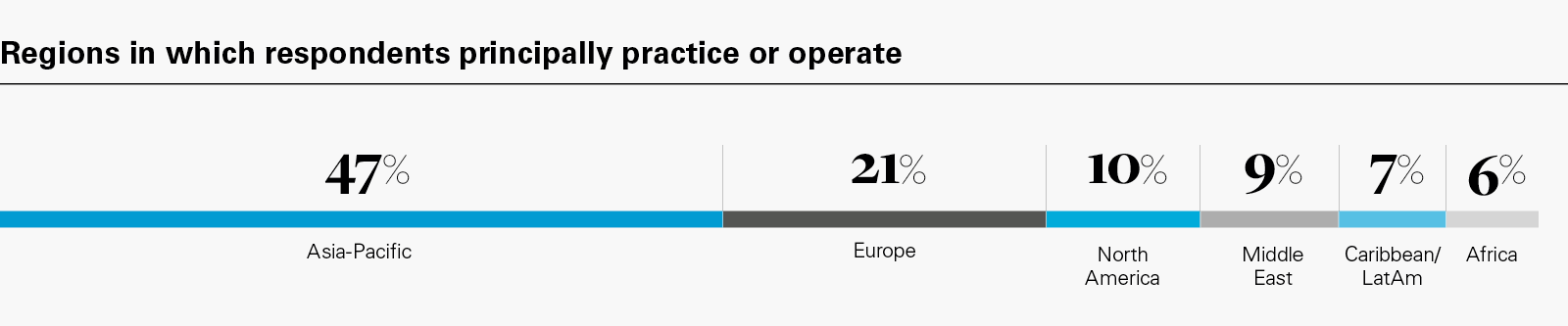 View full image: Regions in which respondents principally practice or operate (PDF)
87% of respondents prefer international arbitration for resolving cross-border disputes
White & Case made a donation to the Child Rights International Network for every completed questionnaire.
London top choice
London is the top choice seat overall for respondents. London and Singapore both rank among the top five seats for each of the six regions in which respondents principally practise or operate.
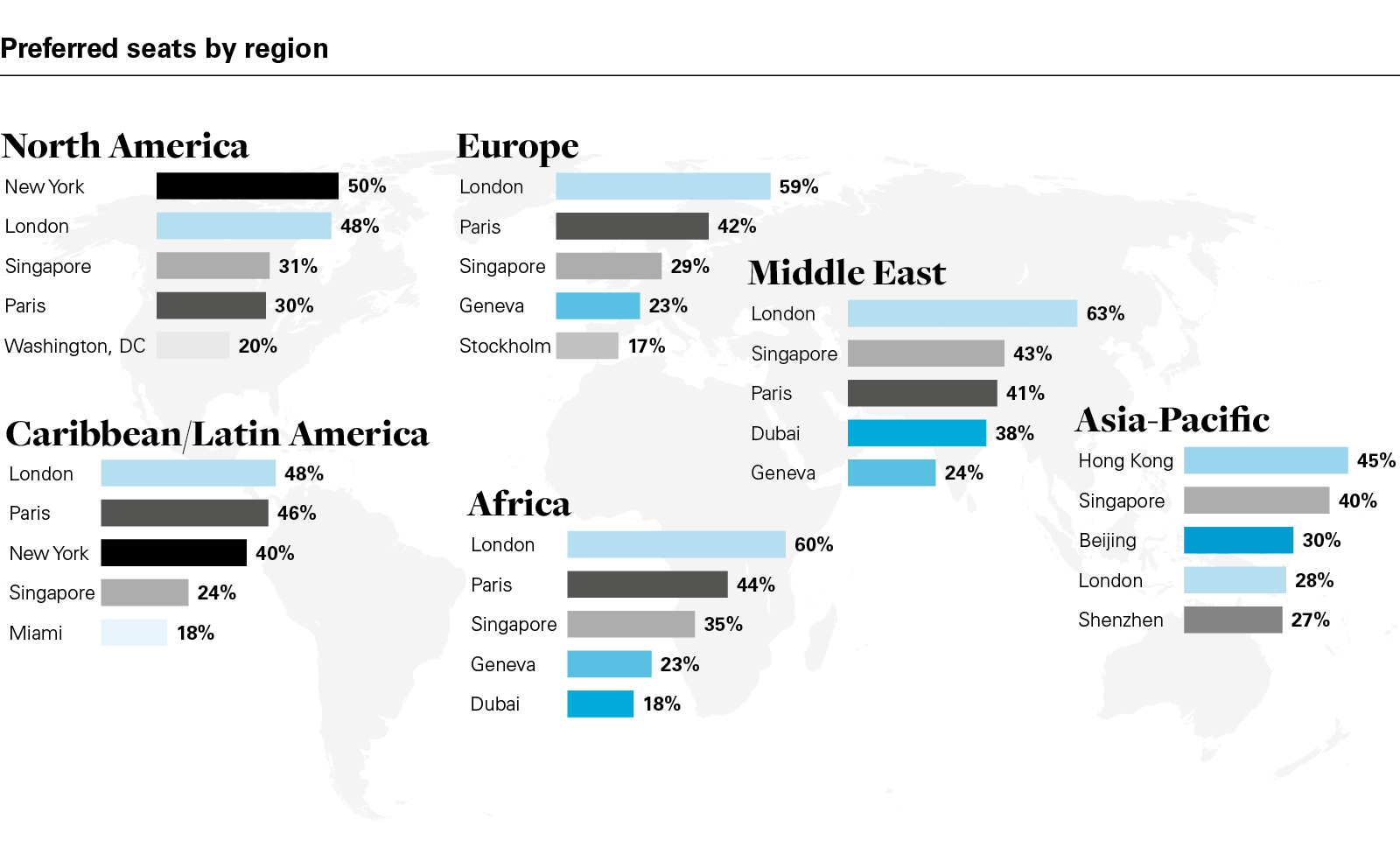 View full image: Preferred seats by region (PDF)
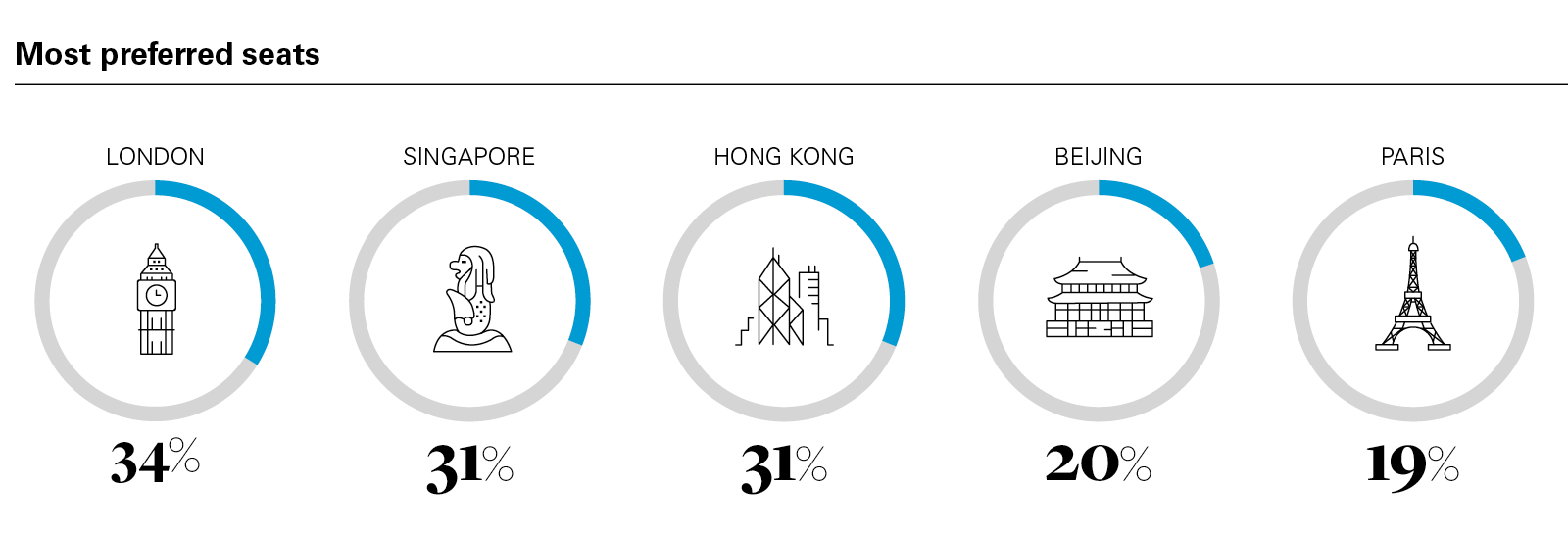 View full image: Most preferred seats (PDF)
ICC Rules lead the way
The ICC Arbitration Rules top the ranking, with 39% of all respondents including them as one of their choices, closely followed by the HKIAC Rules and the SIAC Rules (each attracting votes from 25% of respondents).
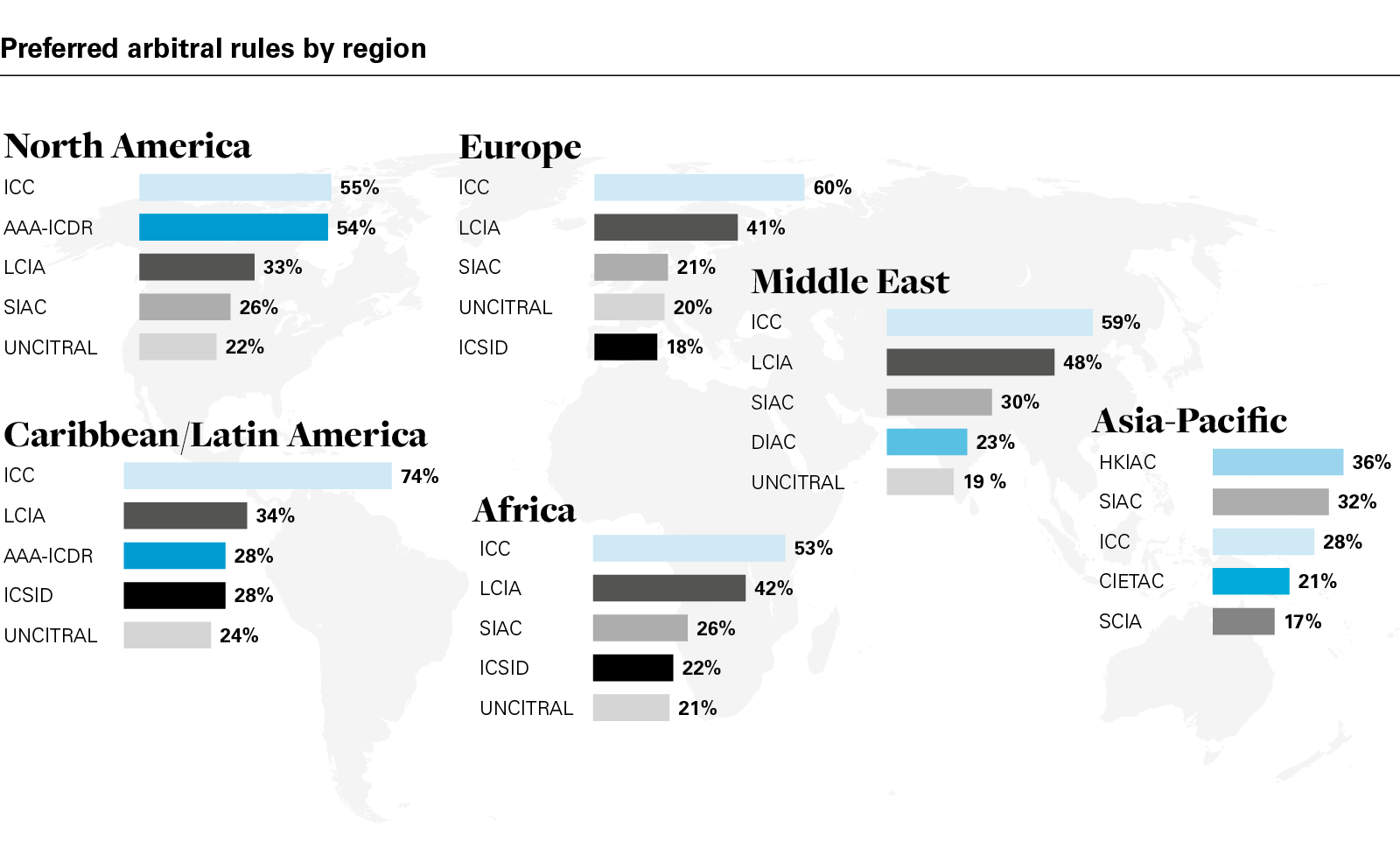 View full image: Preferred arbitral rules by region (PDF)
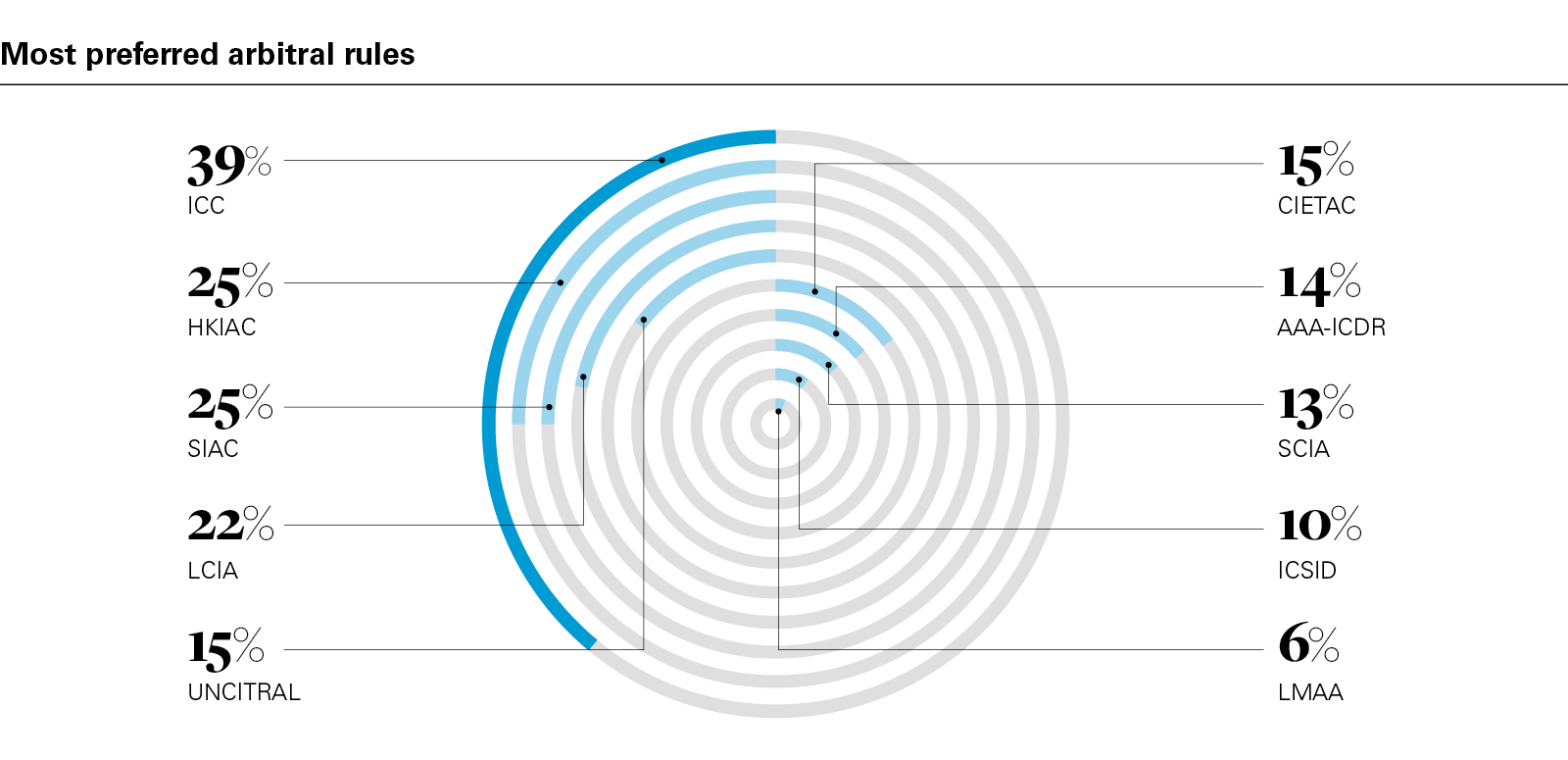 View full image: Most preferred arbitral rules (PDF)
Express lane to efficiency
Both counsel and arbitrators are responsible for behaviour that negatively impacts efficiency in arbitration. Respondents called for greater proactivity and courage from both counsel and arbitrators to address this. On enforcement of awards, the majority of respondents believe annulled awards should not be enforceable.
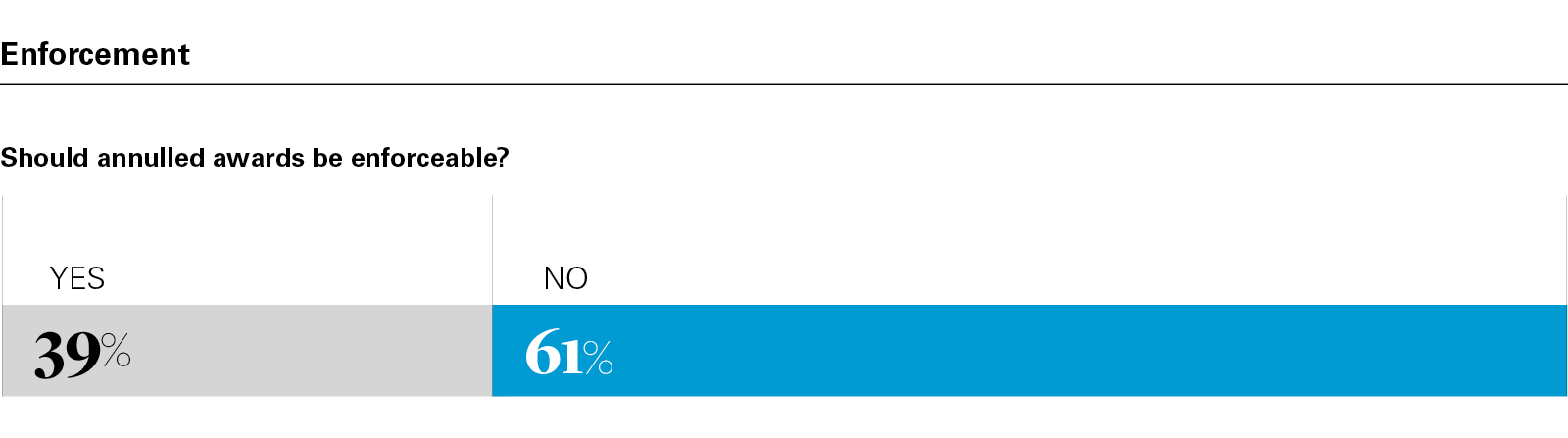 View full image: Enforcement (PDF)
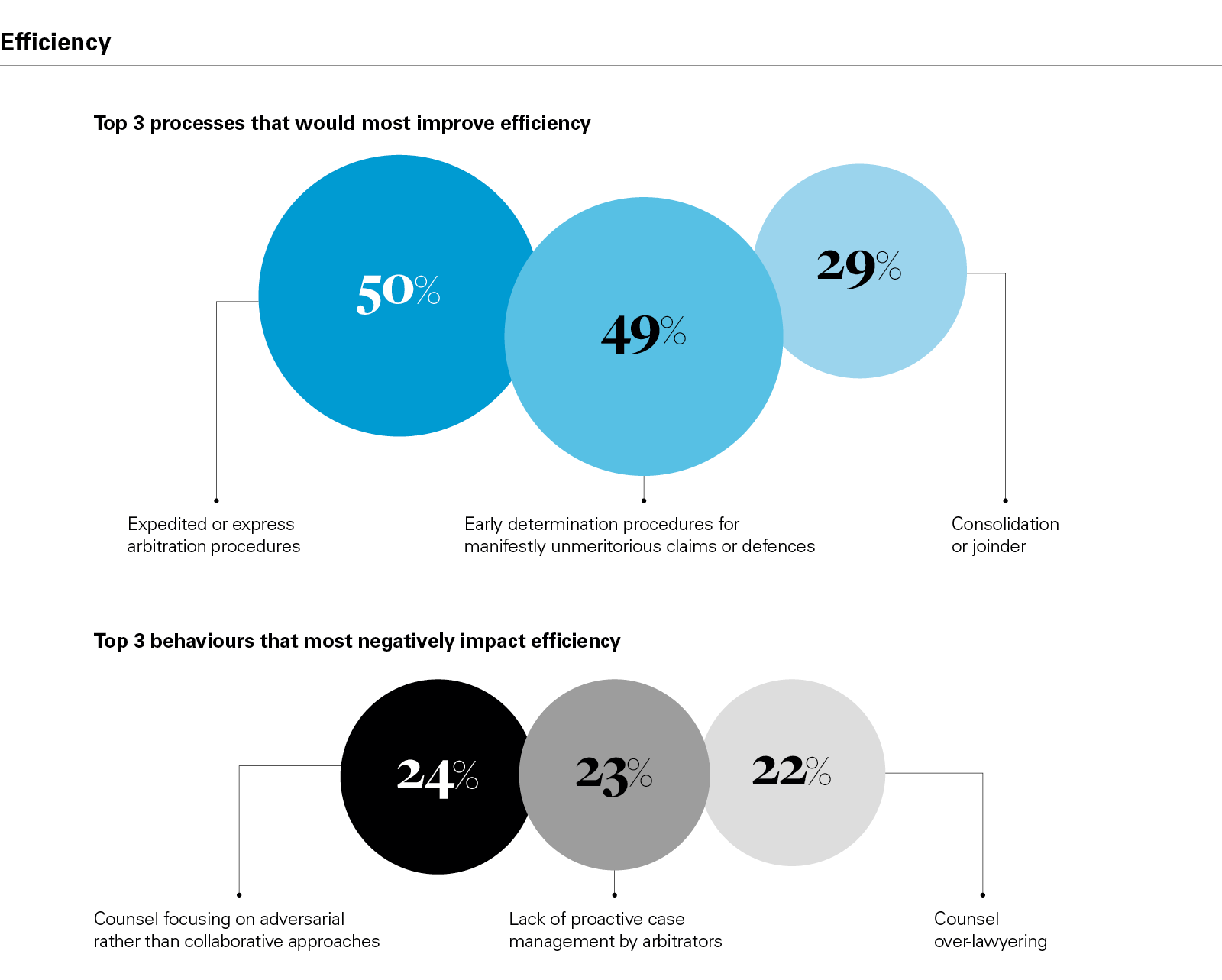 View full image: Efficiency (PDF)
Keeping it confidential
Respondents are conscious of the challenge of balancing confidentiality and transparency where public interest issues may arise in arbitrations. Confidentiality remains key, particularly in commercial arbitrations not involving State parties.
Public access to arbitration
90% of respondents do not favour making hearings public in commercial arbitration
59% of respondents support publishing redacted awards in ISDS case
AI as game changer
Use of AI is expected to grow significantly over the next five years, driven by the potential for efficiencies. Principal current uses of AI include factual and legal research, data analytics and document review. AI assistance in drafting and in evaluating legal arguments is also expected to increase, but there are concerns around accuracy, ethical issues, and AI's ability to handle complex legal reasoning.
AI in international arbitration
90%
of respondents expect to use AI for research, data analytics and document review
of respondents expect to use AI for research, data analytics and document review
54%
say saving time is the biggest driver for use of AI
say saving time is the biggest driver for use of AI
51%
say the main obstacle is the risk of AI errors and bias
say the main obstacle is the risk of AI errors and bias
Chapters
The 2025 International Arbitration Survey questionnaire was completed by 2,402 respondents, nearly doubling the response rate from the previous survey held in 2021. This is the largest and most representative pool of participants yet.


Acknowledgements
The School of International Arbitration of Queen Mary, University of London would like to thank White & Case LLP for its financial and substantive support, in particular Mona Wright, Julie McCoy and Clare Connellan in London, who coordinated the project on behalf of White & Case and provided invaluable input. We are also grateful for the guidance of Birgit Kurtz in New York and the assistance of the White & Case Business Development, Marketing Communications and Creative Services teams.
We would further like to thank our External Focus Group for their feedback on earlier versions of the questionnaire and methodology, including (in alphabetical order): Mr. Juan Pablo Argentato (ICC), Ms. Nadya Berova (Barrick Gold Corporation), Mr. David Bigge (US Department of State), Ms. Alexandra Couvadelli (Gard), Ms. Olivia de Patoul (Le Bureau), Mr. Werner Eyskens (Crowell & Moring LLP), Ms. Caroline Falconer (SCC), Mr. Karl Hennessee (Airbus), Ms. Martina Polasek (ICSID), Dr. Veronika Korom (ESSEC Business School, Paragon) Ms. Joanne Lau (HKIAC), Mr. Luis M. Martinez (ICDR-AAA), Mr. Maxim Osadchiy (Osadchiy Dispute Resolution LLP; QMUL), Dr. Monique Sasson (Arbitra; DeliSasson), Dr. Laurence (Larry) Shore (Seladore Legal), and Ms. Yukiko Tomimatsu (Nishimura & Asahi).
We are also grateful for the assistance of several organisations and individuals who helped promote the survey, in particular: Africa Arbitration, Arbitral Women, Kluwer Arbitration, Transnational Dispute Management/OGEMID, Global Arbitration Review, Thomson Reuters, LexisNexis, Mr. Jonathan Brierley, Dr. Rémy Gerbay, Professor Emeritus (and Head of SIA) Julian Lew KC, Professor Loukas Mistelis and Professor Maxi Scherer.
Most importantly, we would like to thank all stakeholders (private practitioners, arbitrators, in-house counsel, academics, third-party funders, government officials and other respondents) who generously gave their time in completing the questionnaire and/ or being interviewed.
Contacts

Partner
|
Paris

Partner
|
Washington, DC

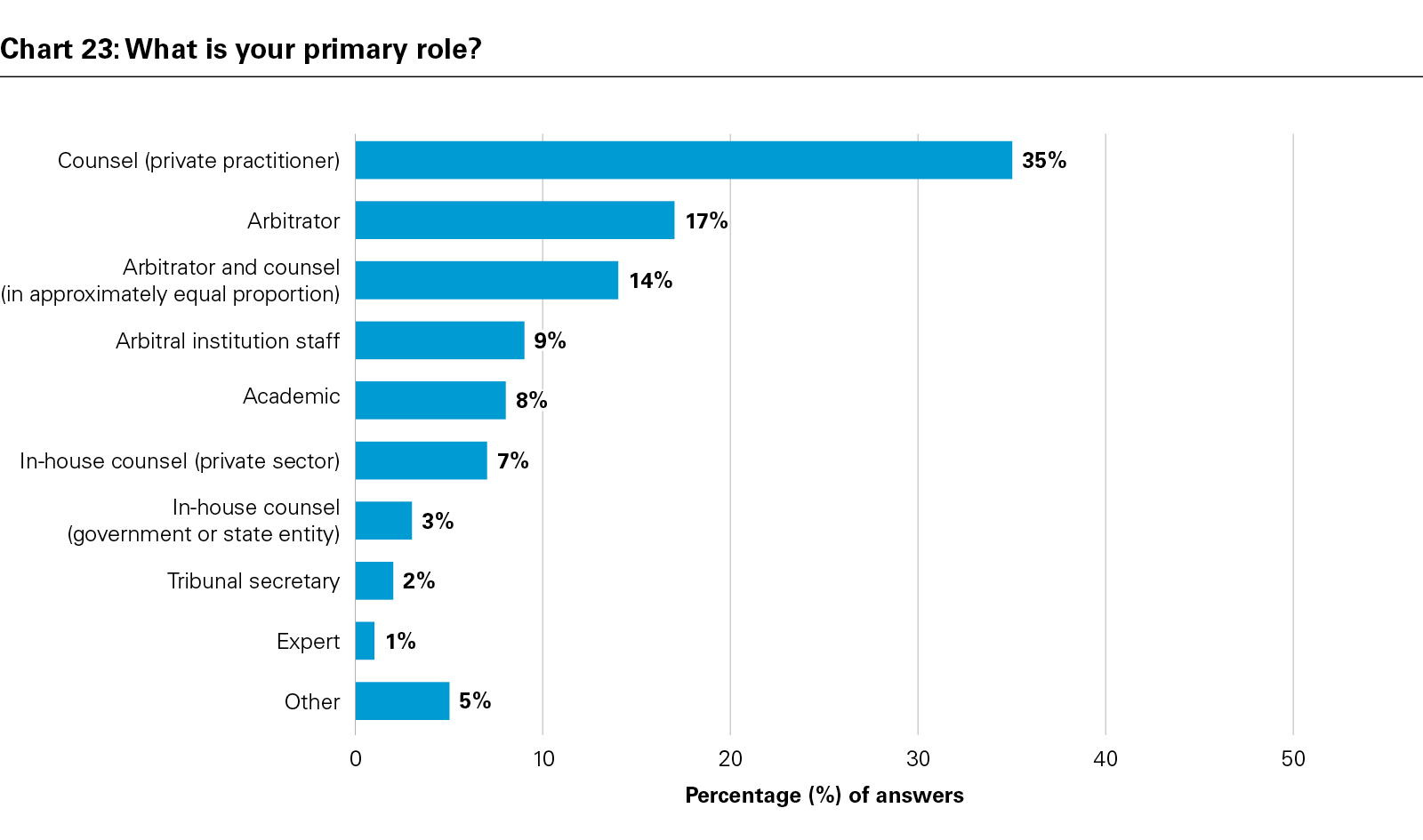 View full image: Chart 23: What is your primary role? (PDF)
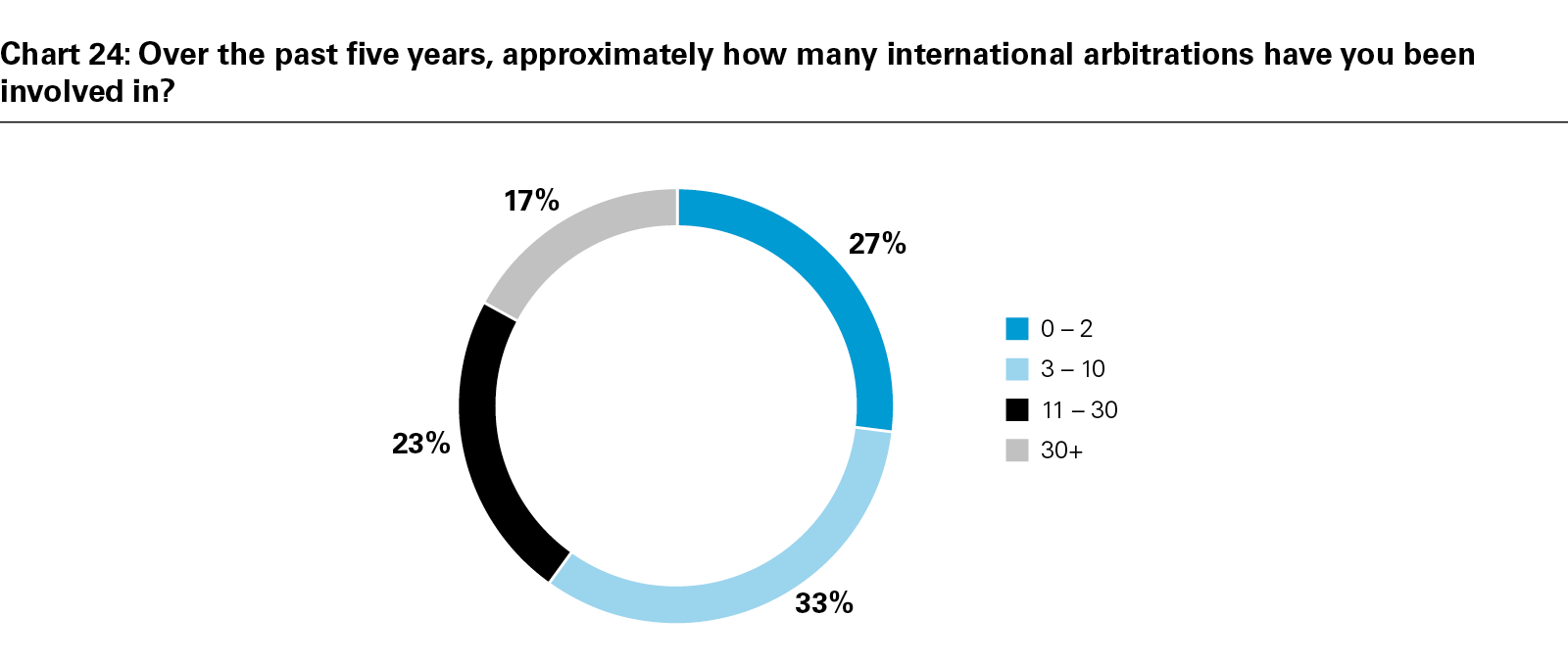 View full image: Chart 24: Over the past five years, approximately how many international arbitrations have you been involved in? (PDF)
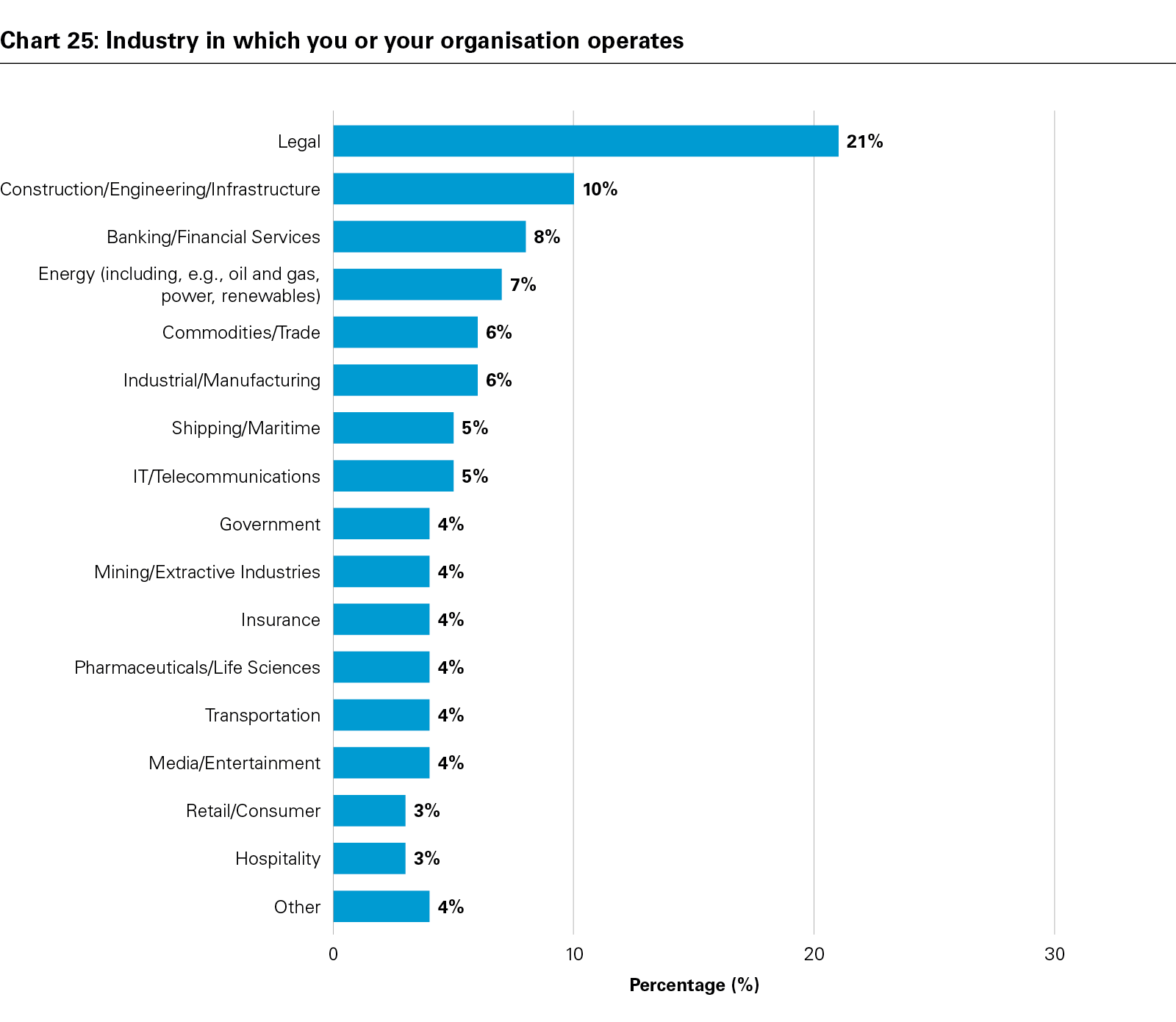 View full image: Chart 25: Industry in which you or your organisation operates (PDF)
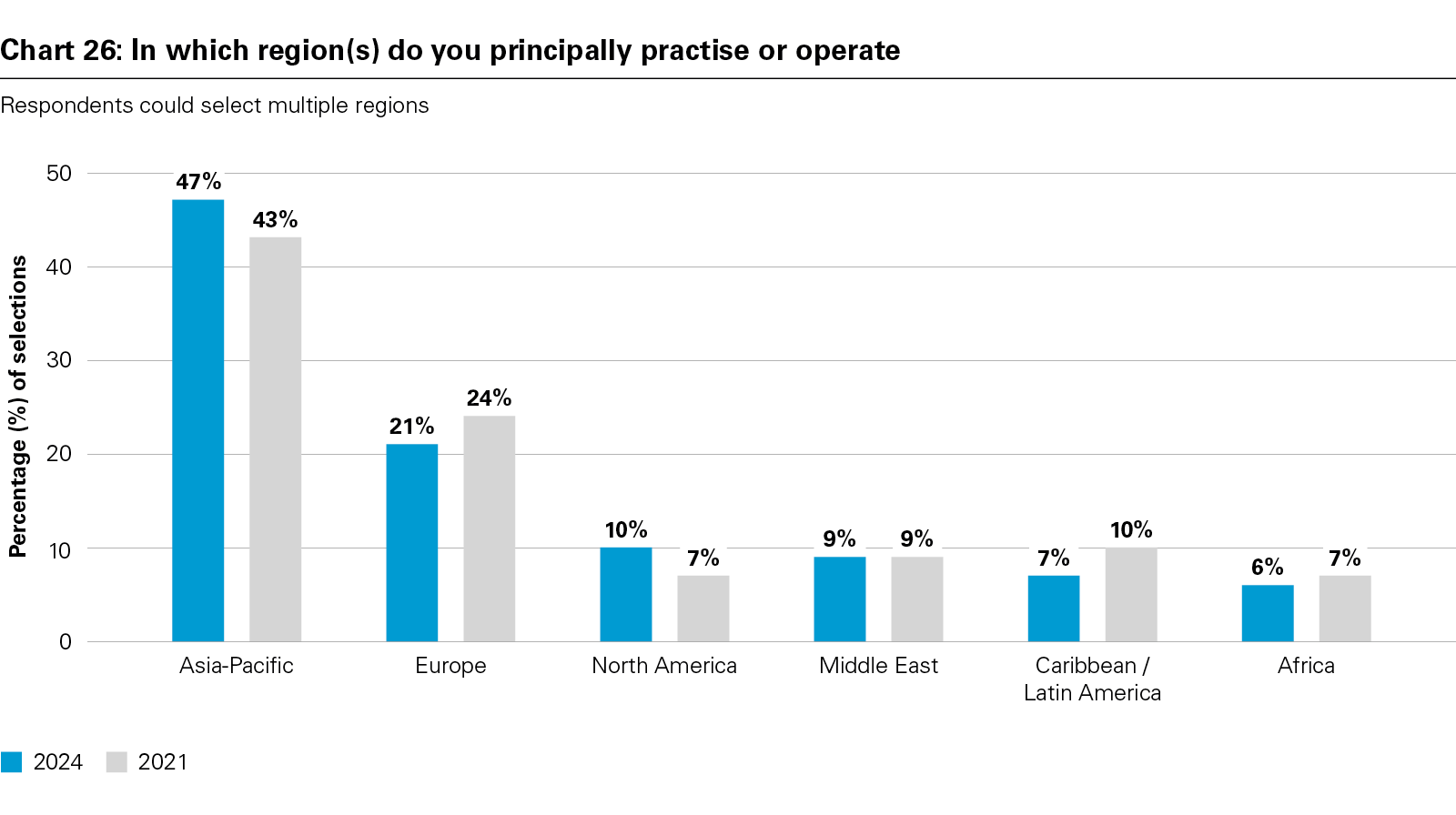 View full image: Chart 26: In which region(s) do you principally practise or operate (PDF)