New frontiers: How AI is transforming the life sciences industry
Taking the pulse of AI in the life sciences sector and exploring how organizations can maximize opportunities from this rapidly evolving technology to build healthier futures
Embracing change
The convergence of artificial intelligence (AI) and life sciences is no longer a distant promise. Companies operating in the sector are actively embracing the technology and are already achieving measurable results. In the following exclusive report from White & Case, in association with Mergermarket, this new reality is explored in depth. Drawing on a proprietary survey of senior executives spanning human pharma and biotech, healthcare provision, medical devices and animal health, the report provides a comprehensive overview of where the sector stands and where it may be heading.
Recent market data demonstrates the scale and urgency of this shift. AI in the pharma market alone is projected to reach US$25.7 billion by 2030, up from around US$4 billion today, according to market research firm Mordor Intelligence. AI-driven drug discovery is also expected to exceed US$20 billion by 2030, per research organization Grand View Research, as firms seek faster routes to novel compounds and more precise trial matching. These forecasts underscore that AI is much more than merely a back-office optimization tool; it is becoming integral to how life sciences companies design, test and deliver therapies, with growing expectations from regulators, investors and patients alike.
Our findings confirm this transition of AI from experimentation to practical application. Tools are being embedded in product design, trial optimization, diagnostics, drug target identification and commercial execution. Organizations are also adapting internally—reassessing governance structures, workforce capabilities and legal frameworks to ensure AI can scale sustainably and in compliance with complex legal frameworks. Board-level involvement is growing, and forward-looking investment strategies are being developed to match the pace of innovation.
This research explores the sector's priorities and pain points in detail. The report begins by mapping current use cases and business goals, showing how companies are deploying AI to address real operational needs—from shortening development cycles to improving diagnostic accuracy. It then turns to the structural challenges that remain, including the legal and regulatory complexities surrounding general AI deployment and use, data protection, intellectual property (IP) and cross-border compliance. These risks are shaping how organizations approach partnerships, procurement and policymaking.
Investment is a central theme. Budgets are shifting from discretionary pilots to embedded line items, with many companies pursuing joint ventures, acquisitions or internal buildouts to accelerate capability development. Local sourcing is often favored, but appetite for cross-border expansion remains in markets with advanced regulatory pathways or concentrated AI talent.
In conclusion, the report examines how success is being defined and why it matters. Metrics such as diagnostic accuracy, cost reduction, and patient access are becoming essential to both internal planning and external validation. Encouragingly, the vast majority of respondents believe AI will improve patient outcomes, while investors increasingly view AI maturity as a signal of innovation-readiness and long-term value creation.
With AI moving rapidly up the agenda in boardrooms and regulatory agencies, understanding how to scale responsibly and legally is critical. This report offers a grounded view of what effective AI adoption in life sciences looks like today—and where the next key opportunities and risks lie.
Methodology
In 2025, White & Case, in partnership with Mergermarket, surveyed 200 senior executives of life sciences organizations. The organizations surveyed included human pharma and biotech companies (75), healthcare providers (50), medical device companies (50) and animal health companies (25). Respondents from each company type were split equally between EMEA (66), Asia-Pacific (67) and North America (67).
Medical device professionals note quality system optimization
05
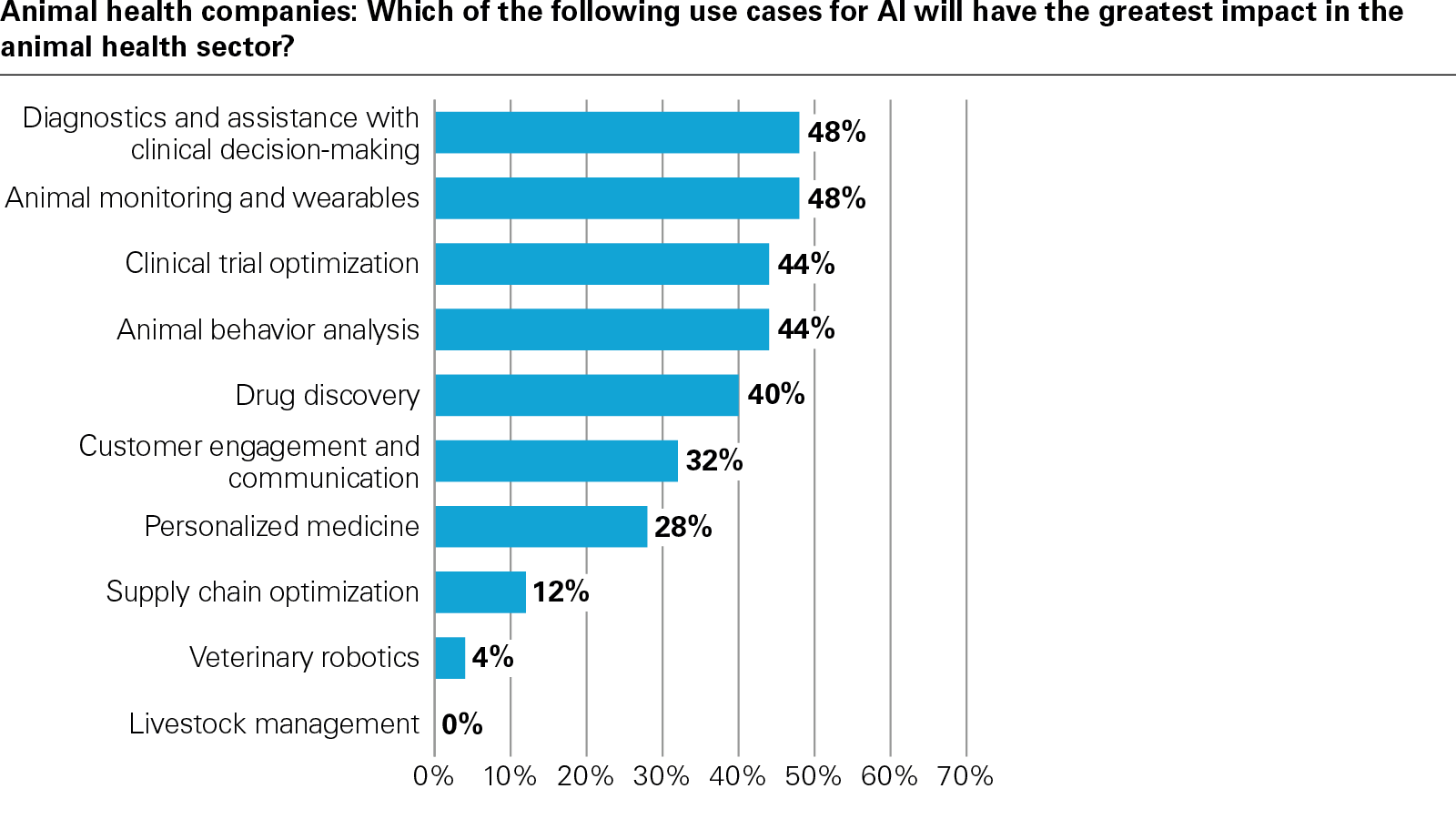
Animal health companies highlight two priority use cases, animal monitoring, and wearables and diagnostics
06
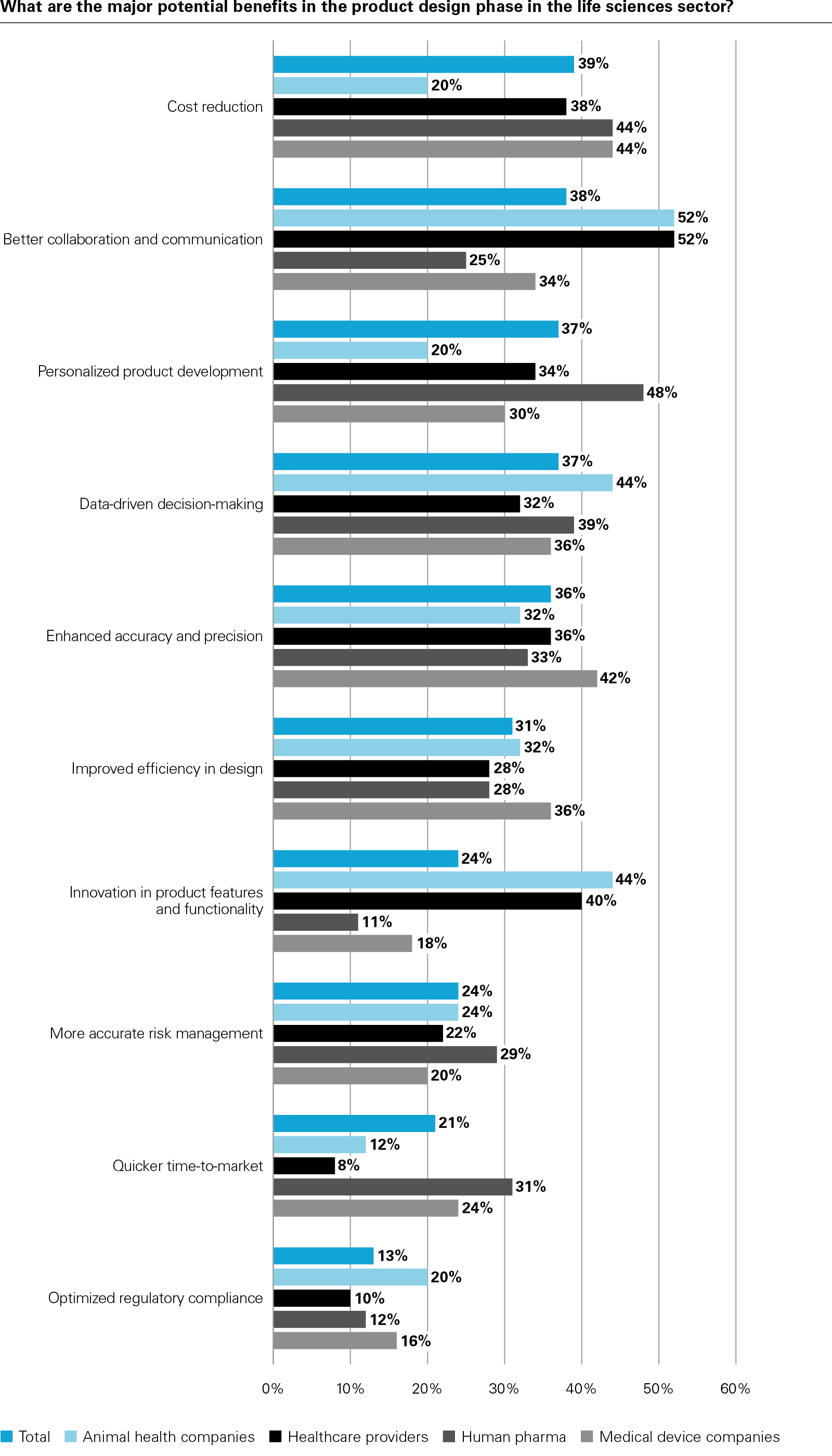
Respondents most commonly highlight cost reductions as a top benefit of integrating AI into the product design phase
07
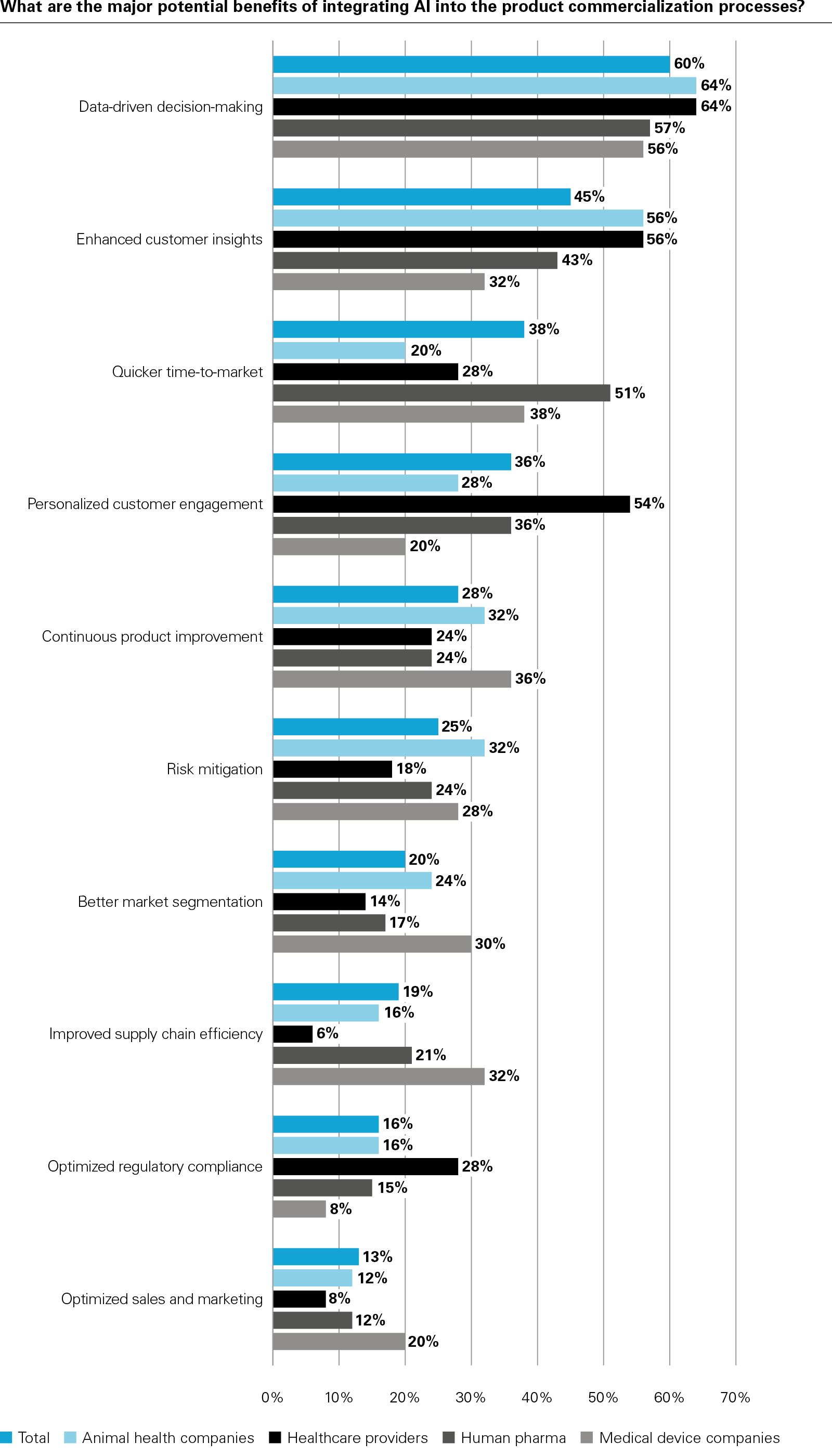
Organizations collectively note that a key benefit of integrating AI into the product commercialization process is data-driven decision-making
With life sciences organizations moving from experimentation to implementation, AI is becoming a core enabler of innovation across the value chain. The technology is now supporting real-time decisions, and the scope of opportunities for its application will open wider as AI tools become more intelligent. The nature of this opportunity, however, depends heavily on the nature of the business—whether it is designing new drugs or devices, optimizing clinical pathways or managing field-deployed devices.
56%
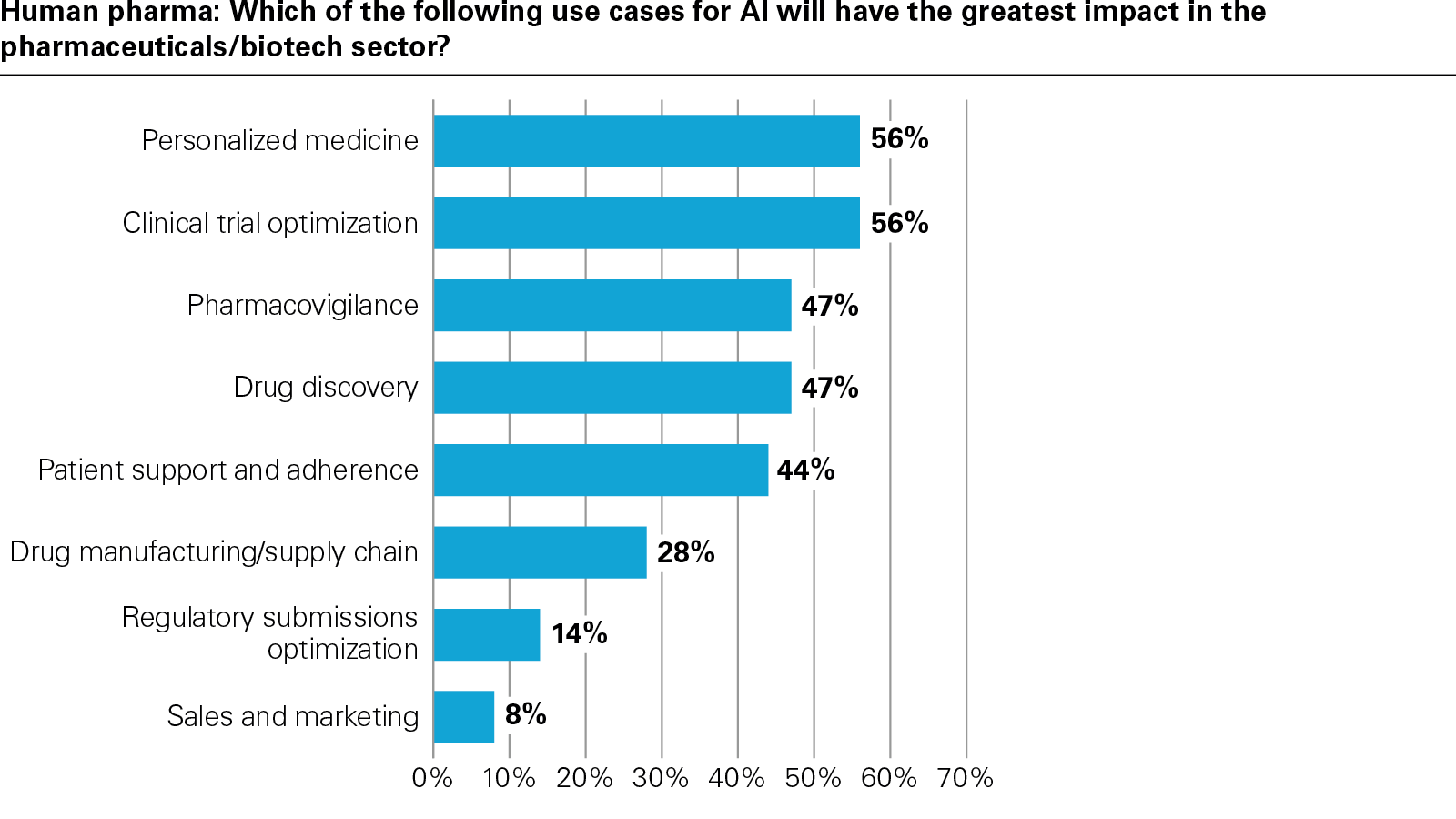
Percentage of human pharma respondents who expect personalized medicine and clinical trial optimization to have one of the greatest impacts in the pharmaceuticals/biotech sector strategy
In human pharma, expectations are highest in personalized medicine and clinical trial optimization, each selected by 56 percent of respondents. These are areas where AI can reshape processes end-to-end: identifying patients by biomarker profiles; designing more targeted trials; improving site selection and enrollment; and optimizing timelines through better forecasting. Pharmacovigilance and drug discovery (each 47 percent) also score highly, reflecting AI’s growing role in surfacing safety signals from real-world data and prioritizing candidates earlier in the pipeline to avoid wasted spend downstream.
"Clinical trials do take time to complete and we need to finish each process effectively, with the right amount of data to draw conclusions," says the chief innovation officer of a US pharma company. "AI can expedite the process, so that products can hit the market sooner."
A vice president of a life sciences multinational explains that AI is playing a key role in personalized medicine, particularly in the early steps. "For example, with personalized therapies, where the whole supply chain is inherently slow and complex, AI-enabled automation can help improve vein-to-vein [taking stem cells, developing treatment and then transferring to the patient] and time-to-patient processes. These are areas where we can gain efficiency, but it does require a lot of validation and regulatory compliance. You can’t just overhaul manufacturing facilities overnight."
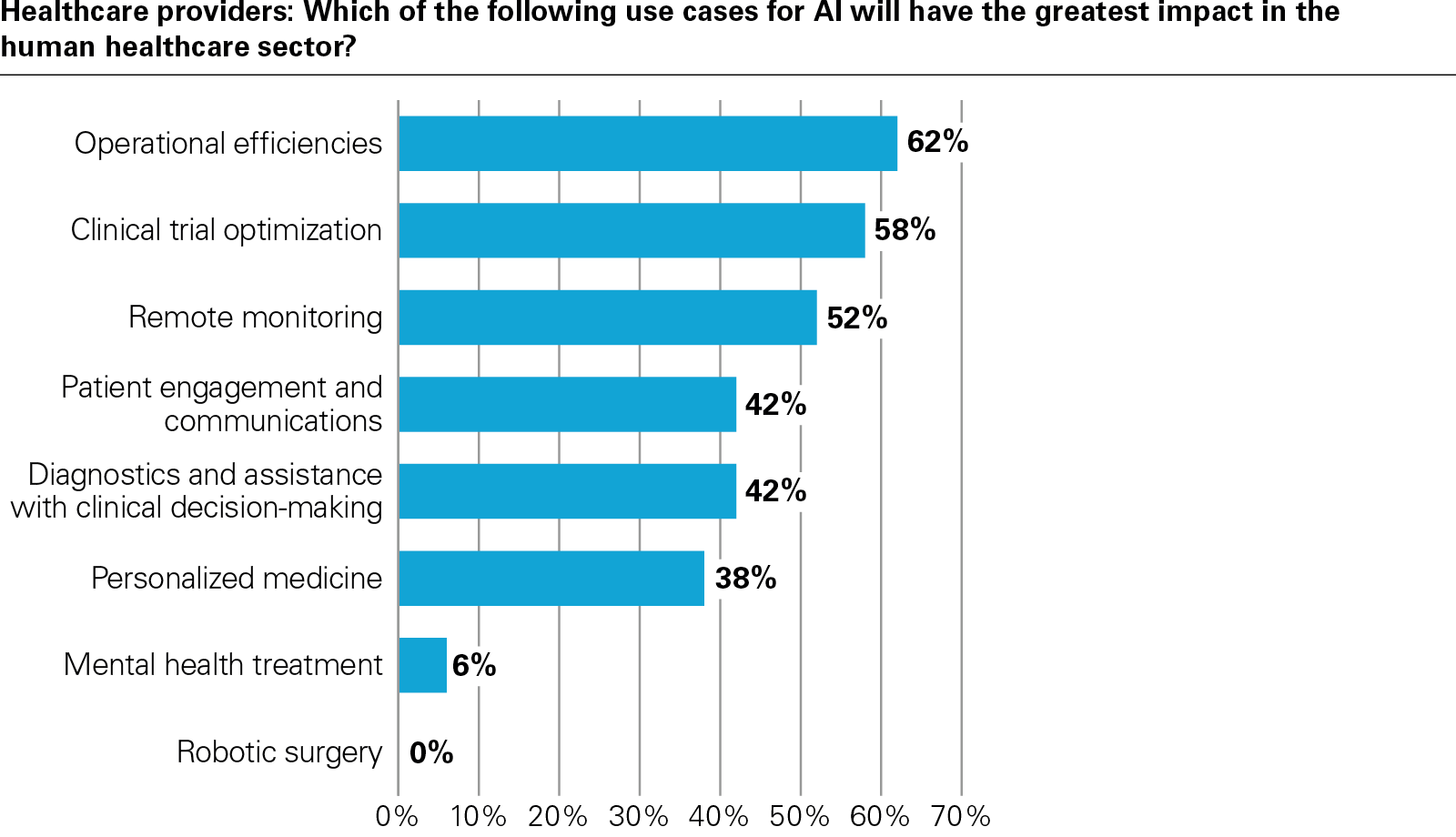
For healthcare providers, the focus is squarely on operational pressures. Respondents see the greatest potential in AI-enabled operational efficiency (62 percent), clinical trial optimization (58 percent) and remote monitoring (52 percent).
"The importance of engagement and keeping in touch with patients has increased. As healthcare providers, the responsibility of communicating falls on us, and we can optimize the process using AI," says the director of innovation of a Taiwanese healthcare provider.
The emphasis reflects real-world constraints: limited staffing, rising demand and the need to improve throughput without expanding headcount. AI is being used to manage patient flow, improve scheduling and identify trial candidates more efficiently. By contrast, robotic surgery (zero percent) and mental health treatment (six percent) are seen as niche use cases, limited by cost and integration challenges.
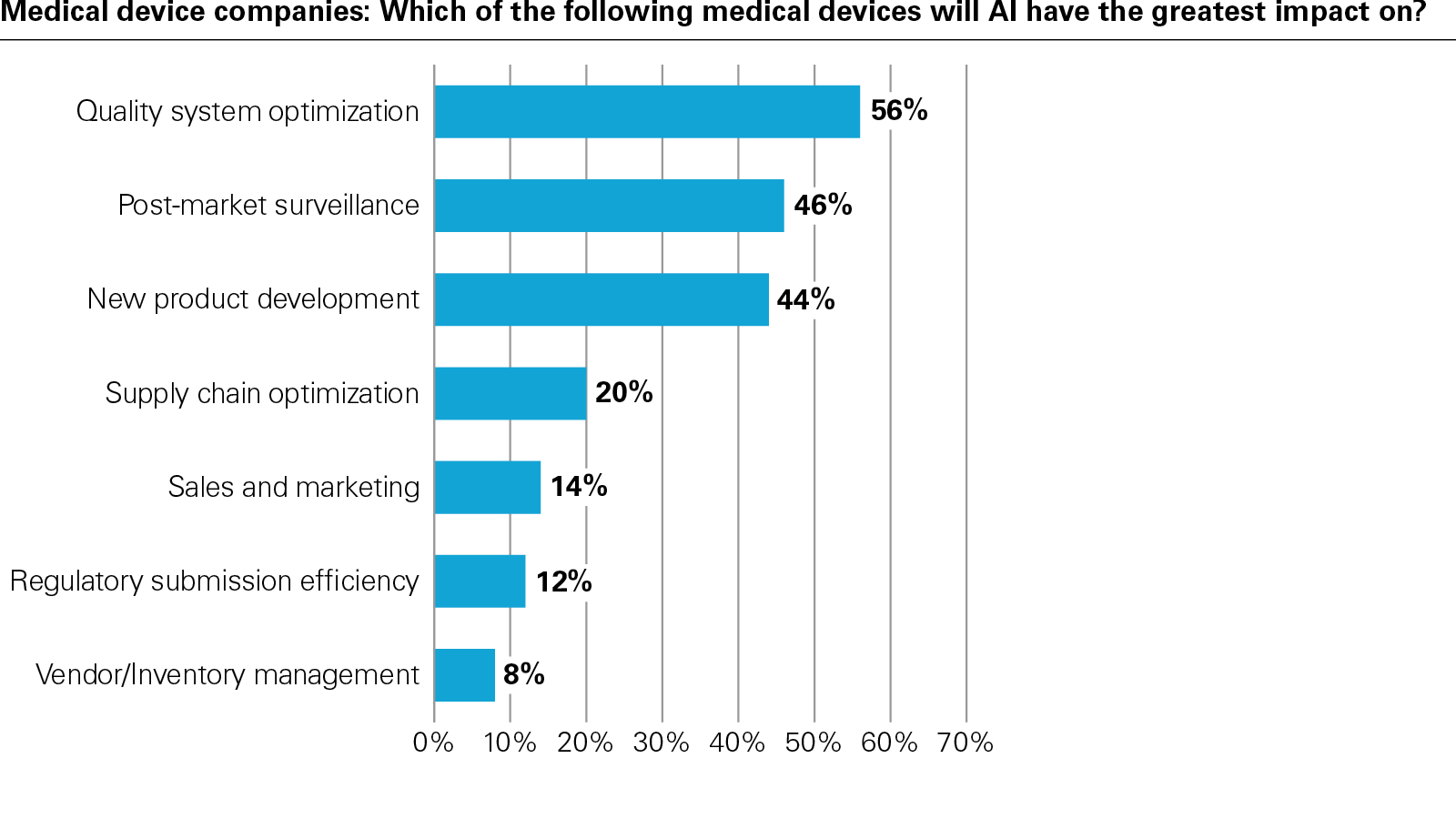
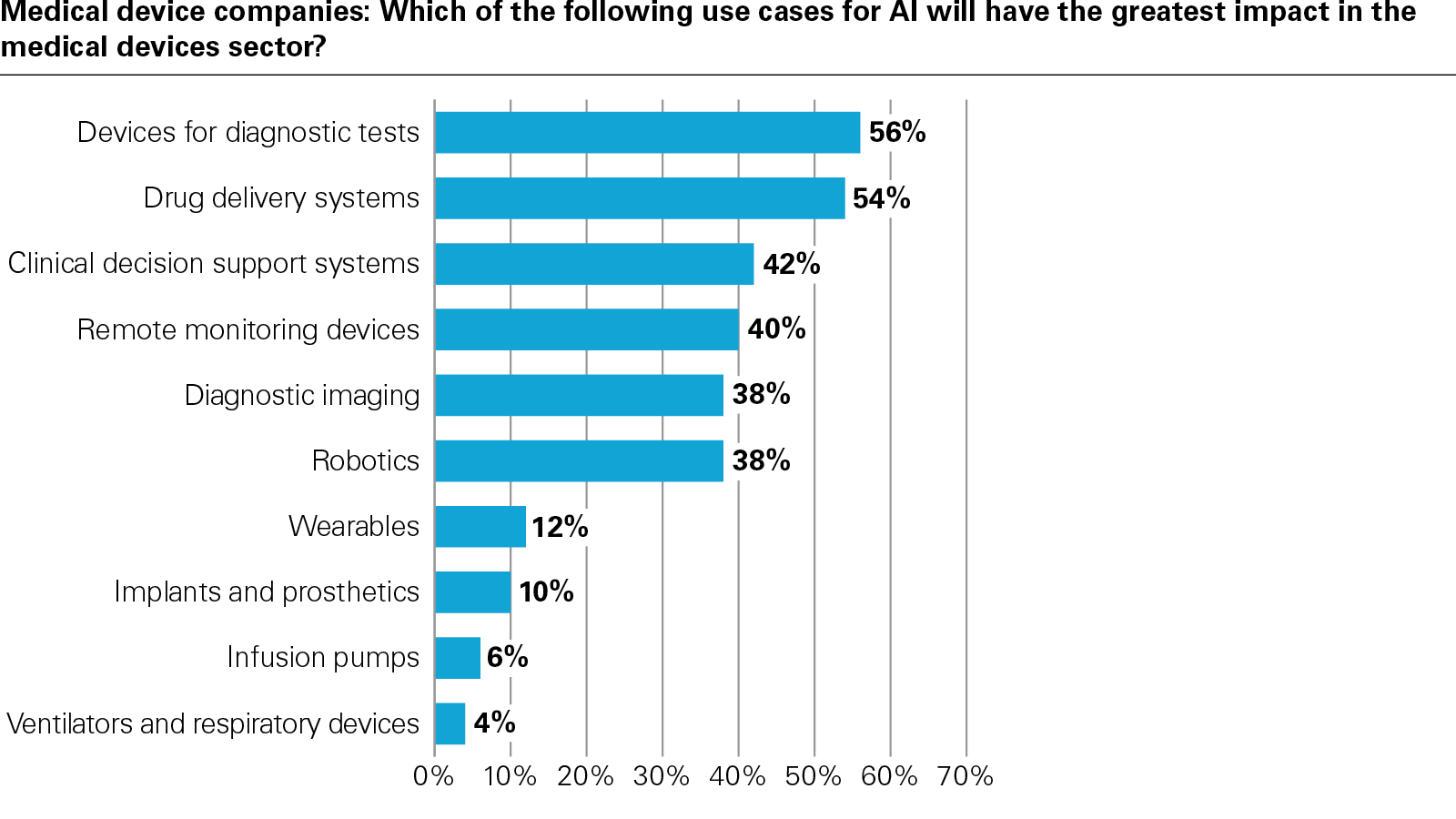
Meanwhile, among medical device companies, the leading area for AI impact is quality system optimization (56 percent), followed by post-market surveillance and new product development. These companies are using AI to improve how they detect and manage quality issues, triage complaints and respond to non-conformances—enhancing both compliance and efficiency. At the product level, devices for diagnostic tests (56 percent) and drug delivery systems (54 percent) are seen as the biggest beneficiaries of AI, thanks to their instrumented design and measurable outputs. More mature device types, such as ventilators and infusion pumps, are seen as slower to evolve due to safety and regulatory constraints.
Animal health companies report a broader spread of priority use cases, led by animal monitoring and wearables (48 percent) and diagnostic decision support (48 percent). These are closely followed by behavior analysis (44 percent) and trial optimization (44 percent). AI tools are being adopted to detect early signs of disease or welfare issues, assist with diagnosis, and streamline the set-up and execution of clinical studies. Robotics and livestock management platforms currently lag due to limited infrastructure and cost-benefit barriers, with just 4 percent and 0 percent, respectively, citing these as high-impact areas.
"Clinical decision-making is an area where AI will be very helpful," says the head of R&D of an animal health company in India. "With animals, the diagnosis process is slightly more challenging. Recognizing reaction to drugs and diagnosing issues effectively will be done using AI."
AI is quickly becoming a frontline capability in life sciences product design. Traditional development cycles often suffer from long feedback loops, where flaws or unmet user needs emerge too late. AI tools help teams simulate outcomes, incorporate usage data and refine concepts earlier and more efficiently.
AI is becoming a core enabler of innovation across the value chain. The technology is now supporting real-time decisions and the scope of opportunities for its application will open wider as AI tools become more intelligent.
Among all participants, 39 percent cite cost reduction as a top benefit of AI when applied to product design, with better collaboration and communication just behind at 38 percent. These goals often combine: Modeling and simulation can eliminate weak candidates early, reduce rework and keep cross-functional teams aligned on requirements, evidence and timelines. Here, cost reduction does not mean cutting corners, but redirecting budgets from dead ends to higher-probability successes.
The emphasis on collaboration is strongest among healthcare providers and animal health companies, where 52 percent of each see it as one of the biggest design benefits. In these settings, "design" often involves service configuration as much as engineering. AI-supported documentation and shared workflow tools help clinical, operations and informatics teams co-create specifications and protocols, translating promising ideas into workable solutions.
"Data-driven decisions can also reduce human errors," says the head of data and AI at a French animal health company. "Teams involved in the design phase can avoid redundant procedures by using AI more extensively in their everyday functions."
Increasingly, product teams are also applying AI earlier in the design life cycle, using data and predictive models to simulate patient behavior, flag likely failure points and iterate more effectively across technical and clinical teams.
Human pharma companies are more likely to highlight personalized product development, with 48 percent choosing it as the primary design benefit. That reflects a shift toward pipelines tailored by biomarkers and subpopulation data. AI supports this by helping teams identify biological variability earlier, anticipate delivery and diagnostic needs, and fine-tune product characteristics for the intended patient population.
Medical device companies, by contrast, focus on enhanced accuracy and precision, cited by 42 percent. AI is being embedded in computer-aided design and simulation tools to refine sensor placement, signal processing and tolerances. The results are fewer late-stage changes, faster validation and stronger submissions for regulatory approval.
Companies are combining multiple datasets—such as anonymized patient records, insurance claims, pharmacy orders and service call logs—to spot where uptake is most likely, identify friction points that delay treatment starts, and fine-tune messaging to the needs of individual sites or clinicians.
In terms of bringing products to market, companies see the biggest benefits of AI in data-driven decision-making, selected by 60 percent of respondents, followed by enhanced customer insights (45 percent). Rather than sticking to fixed launch plans and assumptions, companies are using AI to adjust in real time, whether that means choosing which markets to enter first, focusing field teams where they’ll have the most impact, or shifting marketing strategies as prescribing patterns change. The results are practical: faster time to first prescription; higher conversion from intent to initiation; and fewer patients falling through the cracks between approval and delivery.
The growing focus on customer insight reflects a shift from broad segmentation to more evidence-based targeting. Companies are combining multiple datasets—such as anonymized patient records, insurance claims, pharmacy orders and service call logs—to spot where uptake is most likely, identify friction points that delay treatment starts, and fine-tune messaging to the needs of individual sites or clinicians. When this works well, sales funnels are more effective and supply chains are better matched to actual demand.
However, the most valued benefit depends on the company’s role in the life sciences ecosystem. Over half of healthcare, for instance, highlight personalized engagement (54 percent). AI is helping tailor communication to match language and literacy, direct patients to the right services and support adherence based on individual needs. These tools are especially useful in complex care environments involving multiple providers and payers.
Human pharma executives, by contrast, place more weight on accelerating time to market (51 percent). Here, AI is allowing companies to move faster by identifying high-potential markets earlier, selecting trial sites and investigators with more precision and generating launch materials at greater speed. AI can also help time field deployment more effectively, using live data to guide engagement instead of relying on pre-set timelines. The overall effect is a shorter path from approval to adoption.
White & Case means the international legal practice comprising White & Case LLP, a New York State registered limited liability partnership, White & Case LLP, a limited liability partnership incorporated under English law and all other affiliated partnerships, companies and entities.
This article is prepared for the general information of interested persons. It is not, and does not attempt to be, comprehensive in nature. Due to the general nature of its content, it should not be regarded as legal advice.



 View full image
 View full image
 View full image
 View full image
 View full image
 View full image
 View full image